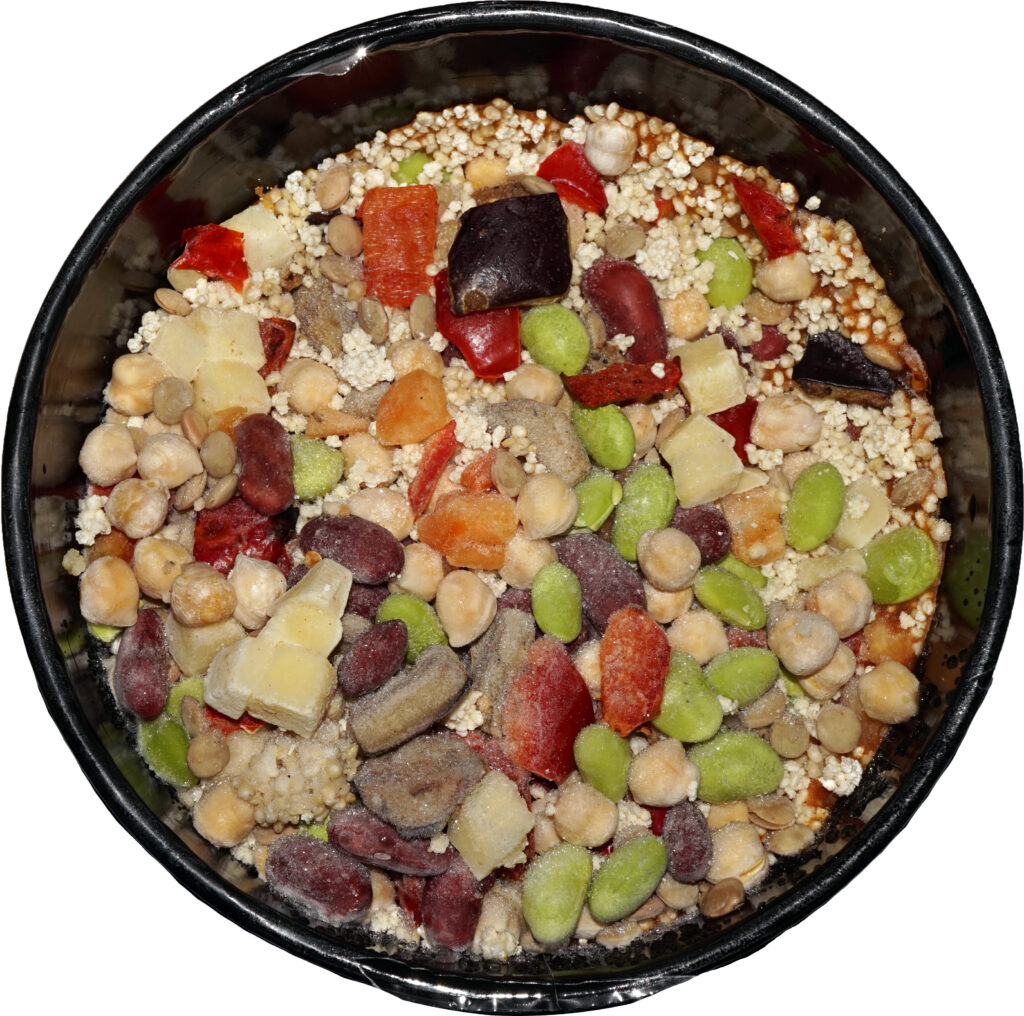
Quick answer
Choose refrigerated prepared meals for meals you can confidently schedule before their labeled use-by dates. Choose frozen prepared meals for changing shifts, occasional dinners at home or a backup supply—provided your freezer maintains 0°F or below. A mixed approach can work: refrigerated meals for confirmed plans, frozen meals for uncertain ones. Freezing is a storage method, not proof that a meal is more or less nutritious. (fsis.usda.gov)
This guide is for US households comparing prepared-meal delivery, not meal kits that require cooking from raw ingredients. Provider examples illustrate storage instructions rather than recommendations. Check delivery eligibility for your address before ordering.
1. Match the meal format to your actual eating schedule
Start with a calendar, not a menu. Mark the lunches and dinners when you expect to be home and want a prepared meal. Separate those into confirmed occasions and possible occasions.
Use refrigerated meals for the confirmed occasions. For the possible ones, consider frozen meals that can remain in storage until needed. USDA distinguishes the long-term safety of properly frozen food from its quality, which can decline during storage. (fsis.usda.gov)
A practical starting point:
| Your situation | Format to consider | Check before ordering |
|---|---|---|
| Predictable lunches or dinners | Refrigerated | Can every meal fit before its labeled date? |
| Rotating shifts or frequent changes | Frozen, or a mixed supply | Can the meal heat from frozen, or does it require advance thawing? |
| Occasional backup dinners | Frozen | Is there enough freezer space for the minimum order? |
| Little freezer space | A smaller refrigerated order | Does the plan size match confirmed meals at home? |
| Several household members eating separately | Individually portioned meals in either format | How many servings are actually in each package? |
Treat this as a planning framework, not a universal ranking. Even a convenient format is a poor fit if the delivery contains more meals than you can store or schedule.
2. Read shelf-life instructions instead of assuming “one week”
“Fresh” does not establish a standard refrigerated lifespan. Read each meal’s label, including its storage instructions and use-by date.
CookUnity’s published guidance says its chilled meals have a refrigerated shelf life of about three to seven days, with a date on each label. It also permits freezing before the labeled deadline and instructs customers to thaw completely in the refrigerator before heating. That is CookUnity’s guidance—not a rule for every refrigerated service.
Factor’s business-program FAQ gives different instructions: refrigerate promptly, expect at least seven days refrigerated, and do not freeze because its meals are intended to be enjoyed fresh for optimal quality. Because this source covers the business program, check the instructions supplied with your own order rather than assuming all plans are identical.
For a frozen example, MagicKitchen.com says to store its meals frozen until ready to consume. Its FAQ describes storage of six months or more but suggests eating them within 30–45 days for quality. That recommendation is specific to its products, not a general expiry period for frozen dinners. (magickitchen.com)
At unpacking, make a short inventory:
- Meal name.
- Labeled use-by or best-quality date.
- Required storage location.
- Whether freezing is permitted.
- Whether heating starts refrigerated, thawed or frozen.
Arrange refrigerated meals by their dates, earliest first. For frozen meals, keep labels visible and record when each meal entered the freezer. This gives you a rotation system without relying on memory.
3. Check cold storage and delivery before building a stockpile
Keep refrigerated meals at 40°F or below and frozen meals at 0°F or below. Use an appliance thermometer to check the storage compartment rather than relying only on its control setting. USDA cautions that a freezing compartment unable to maintain 0°F is suitable only for short-term storage. (fsis.usda.gov)
Before placing an order, clear the space it will need. Ask for package dimensions if the provider publishes no useful storage information. A household freezer already holding other food may not accommodate a large meal order.
Delivery handling matters for both formats. FoodSafety.gov advises checking that packaging is intact and measuring the temperature of perishable food when it arrives. Shipped food should arrive frozen, partially frozen with visible ice crystals, or at 40°F or below. Store it promptly after checking. (foodsafety.gov)
If shipped perishable food arrives above 40°F, notify the company and do not eat or taste it. Smell and appearance cannot establish that it is safe. Photograph the condition and preserve the order information when reporting a problem. (foodsafety.gov)
For changing work shifts, solve the receiving problem separately from the storage problem. A frozen dinner still needs someone to unpack it. Consider arranging delivery when you are home or asking a neighbor to store the food promptly. (foodsafety.gov)
4. Compare the full heating routine, not just the advertised time
Check the instructions for the particular dish and appliance you will use. Include thawing, preheating, stirring and standing time in your decision.
MagicKitchen.com’s trial-pack instructions provide a useful example: they say not to defrost, specify 7½ minutes in a 1,000-watt microwave, require stirring halfway through, and call for a minimum internal temperature of 165°F. The conventional-oven instructions list 50–55 minutes. Those timings apply to that pack, not every frozen meal. (magickitchen.com)
Its beef stroganoff page gives another routine: pierce the film or vent the lid, microwave initially for three to four minutes, stir, then continue in intervals until the center reaches 165°F. It also specifies standing time. This illustrates why instructions should follow the meal, not merely the brand. (magickitchen.com)
Before buying, check:
- Starting state: refrigerated, thawed or frozen?
- Equipment: microwave, conventional oven or stovetop?
- Packaging: heat in the tray, remove film, vent a lid or transfer to a dish?
- Completion: what temperature and standing time are specified?
For cooked leftovers, USDA advises reheating to 165°F. Microwave heating can leave cold spots, so check several places with a food thermometer and follow standing-time instructions. Do not thaw meals on the counter. (fsis.usda.gov)
If you eat at work, compare the instructions with the equipment actually available there. A meal requiring an oven is not a useful microwave-only lunch.
5. Separate texture preferences from nutrition
There are documented quality trade-offs, but they do not establish that every refrigerated meal tastes better than every frozen one.
USDA explains that slow freezing can create larger ice crystals that damage food structure. It also identifies lettuce, mayonnaise and cream sauces as examples that may not freeze well. A commercially frozen meal and a refrigerated meal frozen at home should therefore not be assumed to have identical texture after heating. (fsis.usda.gov)
Use those points to guide a small initial trial, not to reject an entire format. Record whether you liked the sauce, vegetables and overall texture after following the instructions. Avoid placing a large repeat order before learning which dishes suit you.
For nutrition, compare the actual labels. USDA states that freezing itself does not destroy nutrients and that meat and poultry show little change in nutrient value during freezer storage. That does not mean all prepared meals have equivalent ingredients, portions or nutrition. (fsis.usda.gov)
Start with serving size and servings per container. FDA notes that the nutrition information is usually per serving and that serving size is not a recommendation for how much to eat. (fda.gov)
Worked label example: FDA’s educational lasagna example lists 280 calories and 850 mg sodium for one cup. Eating two cups means 560 calories and 1,700 mg sodium. These are FDA example values, not measurements of a meal-delivery product. The lesson is to compare the portion you intend to eat, rather than two headline calorie numbers. (fda.gov)
Also review ingredients and allergen declarations for the exact meal. “Fresh” and “frozen” do not answer those questions.

6. Build a weekly routine for uncertain shifts or backup dinners
The following routines are illustrative planning options, not provider requirements or tested outcomes.
For changing work shifts
At the beginning of the week, assign refrigerated meals only to confirmed eating occasions that fit their labeled dates. Keep uncertain occasions covered by frozen meals, if you have suitable storage.
When the schedule changes:
- Recheck the refrigerated inventory and dates.
- Reschedule a meal within its allowed window.
- If that is not possible, check whether its provider permits freezing.
- If freezing is permitted, act early rather than waiting until the deadline.
- Preserve the original instructions and follow the provider’s thawing procedure.
USDA recommends freezing food you will not use promptly sooner rather than later for better quality. Do not treat freezing as a way to rescue food that was handled unsafely. (fsis.usda.gov)
Before the next order deadline, count what remains. Reduce or skip a delivery if the service’s terms allow it and your supply already covers your plans.
For a small backup supply
Choose a few meals compatible with your available appliance, preferably with no advance thawing if spontaneous use is the goal. Store them together with readable labels.
Check the supply weekly. Use older meals first, replenish what you actually use, and follow each product’s storage and quality guidance. For couples or families, count required servings: one tray is not automatically one household dinner.
The aim is a usable reserve, not a freezer full of meals you repeatedly overlook.
7. Avoid these mistakes before choosing your next order
Use this final check before committing:
- Ordering for an ideal week: Count confirmed eating occasions, not every possible dinner.
- Assuming every chilled meal lasts seven days: Read each label; provider guidance differs.
- Freezing without checking: A provider may permit freezing, discourage it for quality, or require a particular thawing method.
- Thawing everything at once: Keep the reserve frozen until the instructions and your plans call for thawing.
- Treating the timer as proof of completion: Follow the meal’s heating instructions and verify the required temperature.
- Comparing nutrition without serving counts: Check whether the label describes one serving or the whole package.
- Buying before checking storage and coverage: Confirm both the physical space and delivery eligibility.
MagicKitchen.com’s FAQ currently specifies delivery to the lower 48 states, while CookUnity’s supplied pages require a ZIP-code check. Do not assume nationwide availability from either example. (magickitchen.com)
Bottom line: Choose refrigerated meals when you can assign them to specific occasions before their dates. Choose frozen meals for uncertain occasions when freezer space and heating instructions fit. If your week contains both, start with a small mixed supply and adjust future orders to what you actually use.